
Tuning your RC Drift Car
Many beginners ask the question “How do I tune my RC Drift Car?” The short answer is that there is no one single setup that is right for everyone. Tuning an RC Drift Car is relevant to each drivers technique.
You see, everyone has a different technique and style. I have picked up the remote of some of the top rc drift cars in the country and tried driving and thought to myself “This is terrible”. But, that’s because my technique is completely different to someone else.
The bottom line is that you need to tune your car to your driving technique, style, chassis and the track that you are driving on. All of these things change the way your car will handle and react to the driver.
RC drifting is an electrifying hobby that combines remote-controlled cars with the precision of professional motorsports. To truly excel in this pursuit, mastering the art of tuning your RC drift car is essential.
This will cover most aspects of RC drift car tuning, from the basics to advanced points, with a special emphasis on wheel alignment, camber angle, toe angle, castor angle, roll centre, wheel width, gyro tuning, transmitter tuning, ESC tuning, and Ackermann steering geometry.
By the end, you will know what items to adjust and what each adjustment does. As a result, you will have a good idea on what to play with for peak performance on the Australian RC Drift tracks.
I will provide more articles focusing on each of the sections below in the future.
Why Tune Your RC Drift Car?
Tuning enhances performance, stability, and responsiveness, allowing for a customized driving experience that matches your style and the demands of different tracks.
Section 1: Understanding RC Drift Cars
Before we dive into the details of tuning, let’s lay a foundation. RC drift cars are designed to slide gracefully through corners, emulating the style of professional drift racing. They comprise several key components:
- Chassis: The structural core of your RC drift car.
- Tires: The crucial connection between your car and the track.
- Suspension: Essential for handling and stability.
- Electronics: Steering, throttle, motor, ESC, Transmitter and more.
Section 2: Choosing the Right RC Drift Car
Selecting the perfect RC drift car is the first step towards success. Consider the following factors:
- Budget: Determine your financial limits.
- Skill Level: Choose a car that aligns with your experience.
- Availability of third party upgrades: make sure that there are plenty of upgrades available.
- Local Knowledge: Choose a chassis that you can leverage the help of local people at your local track for help and advice.
Conduct thorough research and talk to people at your local track to identify a reliable chassis that meets your specific needs and budget.
Section 3: Wheel Alignment – The Crucial Factors for Tuning an RC Drift Car
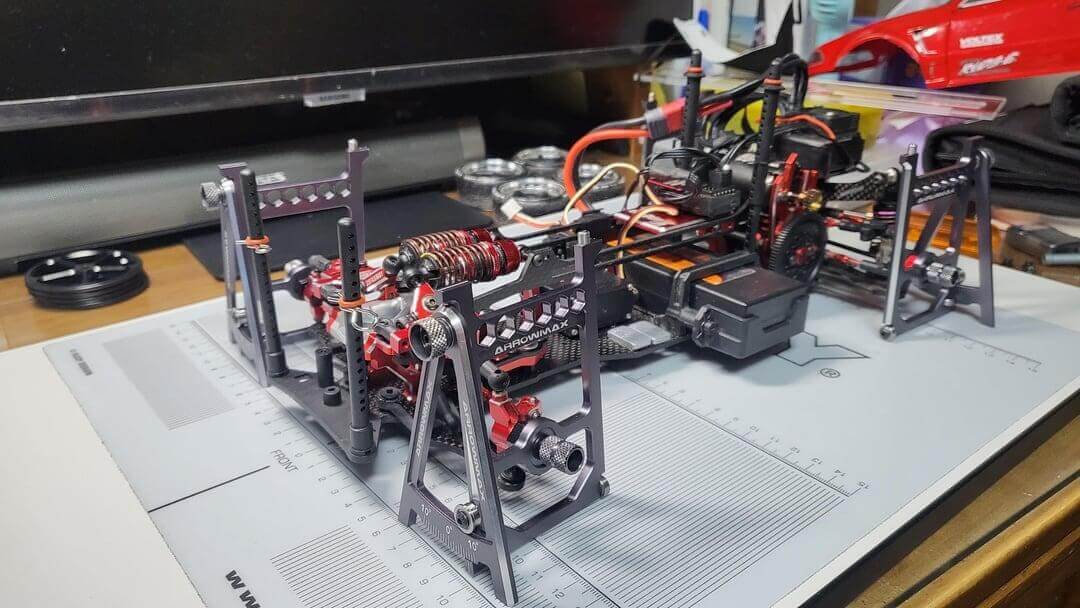
Proper wheel alignment is a cornerstone of RC drift car tuning, and it involves several key elements that significantly impact your car’s performance on the track. Let’s delve into these elements in detail:
- Camber Angle:
- Camber angle is a vital parameter that influences tire wear and traction.
- Adjust the camber angle for both the front and rear wheels. For the front wheels, a slight negative camber (the top of the wheels tilted inward) enhances cornering stability. Conversely, the rear wheels should have a slight camber to improve traction to ensure the right amount of contact patch for the grip that you require on your track.
- Toe Angle:
- Toe angle is another critical aspect of wheel alignment that directly affects your RC drift car’s handling and stability.
- On the front wheels, consider a slight toe-out setup (the front of the wheels angled outward). This configuration enhances initial turn-in response and agility when entering corners.
- For the rear wheels, opt for a slight toe-in setup (the rear of the wheels angled inward). This promotes better straight-line stability and controlled drifts when exiting corners.
- Castor Angle:
- The castor angle plays a pivotal role in steering response and self-centering of the front wheels.
- While a castor angle that’s too aggressive can improve cornering, it may compromise straight-line stability. Thus, finding the right balance is key.
- Experiment with different castor angles to achieve a setup that suits your driving style and track conditions. This allows you to strike a perfect balance between responsive steering and stable straight-line driving.
- Roll Center:
- Roll center is a vital but often overlooked aspect of chassis setup, significantly impacting your RC drift car’s performance.
- Front Roll Center: Lowering the front roll center enhances corner entry and initial turn-in response, ideal for tighter corners and technical tracks.
- Rear Roll Center: Lowering the rear roll center can improve rear-end stability during corner exits and reduce the chances of traction rolling.
- Roll center is a vital but often overlooked aspect of chassis setup, significantly impacting your RC drift car’s performance.
- Wheel Width Front to Rear:
- The width of your RC drift car’s wheels from front to rear is another crucial parameter to consider during chassis setup, and it comes with its own set of pros and cons.
- Wider Front Wheels:
- Pros:
- Increased grip during corner entry, aiding in steering response and control.
- Improved initiation of drifts, making it easier to get the car sideways.
- Cons:
- Reduced straight-line stability, which may require more precise throttle control.
- Potential for increased tire wear due to higher grip during cornering.
- Pros:
- Wider Rear Wheels:
- Pros:
- Enhanced stability and traction during corner exits, allowing for better control as you power through the drift.
- Reduced risk of traction rolling.
- Cons:
- Slightly decreased agility in tight corners, requiring adjustments to your driving technique.
- Potential for increased tire wear on the rear due to higher grip during acceleration.
- Pros:
- Wider Front Wheels:
- The width of your RC drift car’s wheels from front to rear is another crucial parameter to consider during chassis setup, and it comes with its own set of pros and cons.
- Gyro Tuning:
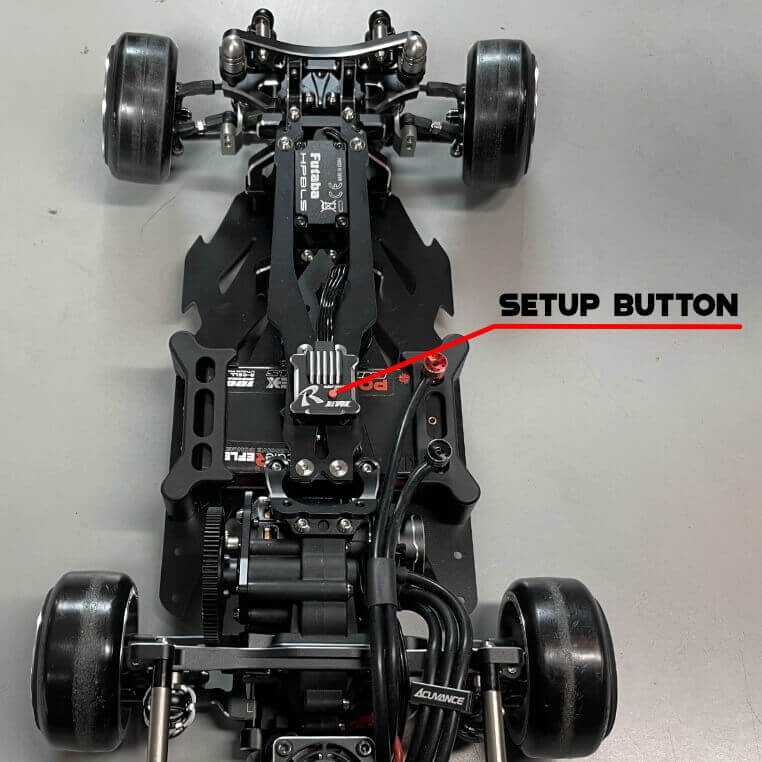
- The gyro is a critical electronic component that assists in maintaining stability and control during drifts.
- Adjust the gyro’s gain settings to fine-tune its responsiveness. Higher gain provides more stability, while lower gain allows for more aggressive and nimble drifting.
- Finding the right gyro setting is crucial as it can significantly impact your ability to maintain control during challenging drift maneuvers.
- Transmitter Tuning:
- Your transmitter is the link between you and your RC drift car, and tuning it correctly is essential for precise control.
- Set up your transmitter to match your preferences, including steering and throttle sensitivity, steering dual rates, and throttle curves.
- Ensuring that your transmitter is finely tuned will enhance your ability to execute precise drifts and control your car in various situations.
- ESC Tuning:
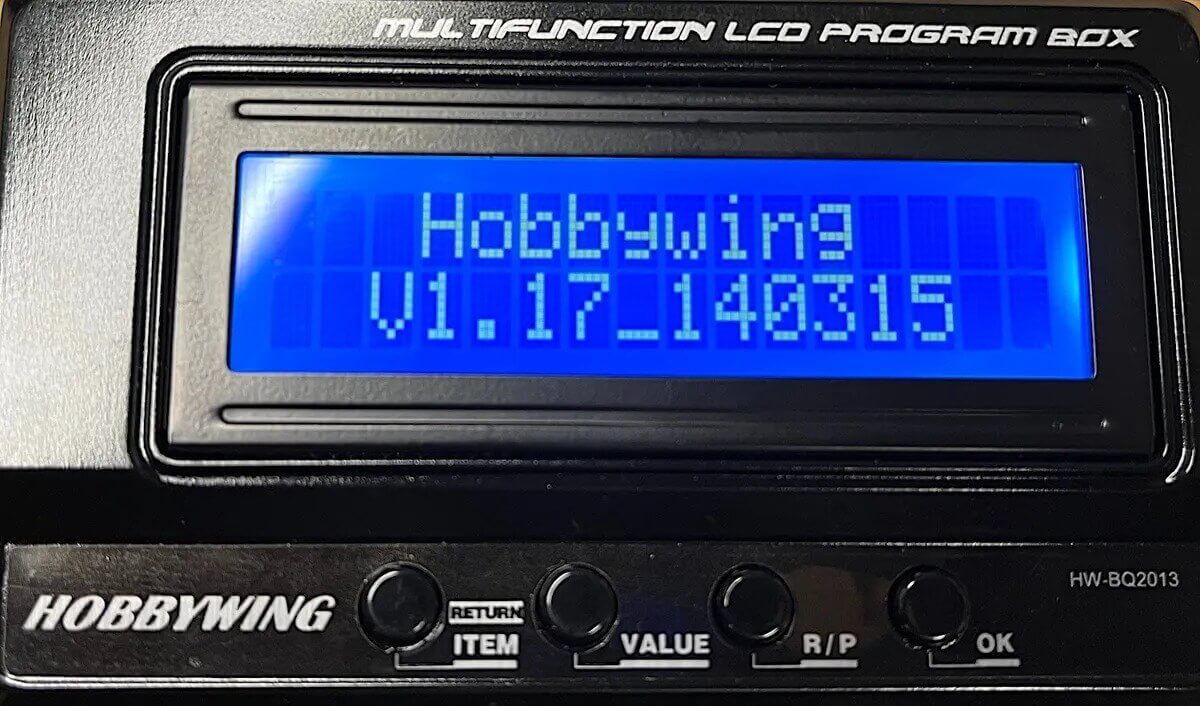
- Electronic Speed Controller (ESC) tuning plays a crucial role in achieving optimal performance. Modern ESCs offer advanced settings to fine-tune your RC drift car’s power delivery.
- Boost and Turbo Settings: Boost and turbo settings allow you to control how much additional power is delivered when you apply full throttle. These settings are particularly useful for initiating and maintaining drifts.
- Boost: Adjusting boost settings controls the additional power you receive when you reach the throttle point that you set in your ESC, helping you with more wheel spin when you want it.
- Turbo: Turbo settings add extra power as you pull full throttle
- Punch Control: Punch control determines how aggressively power is delivered when you touch the throttle. Higher punch settings provide immediate power, ideal for quick transitions and aggressive maneuvers, while lower settings offer smoother and more controllable acceleration.
- Drag Brake: Drag brake settings control the amount of braking applied when you release the throttle. Higher drag brake settings help the car decelerate and slow down more quickly when you lift off the throttle, aiding in controlled drifts and corner entry.
- Ackermann Steering Geometry:
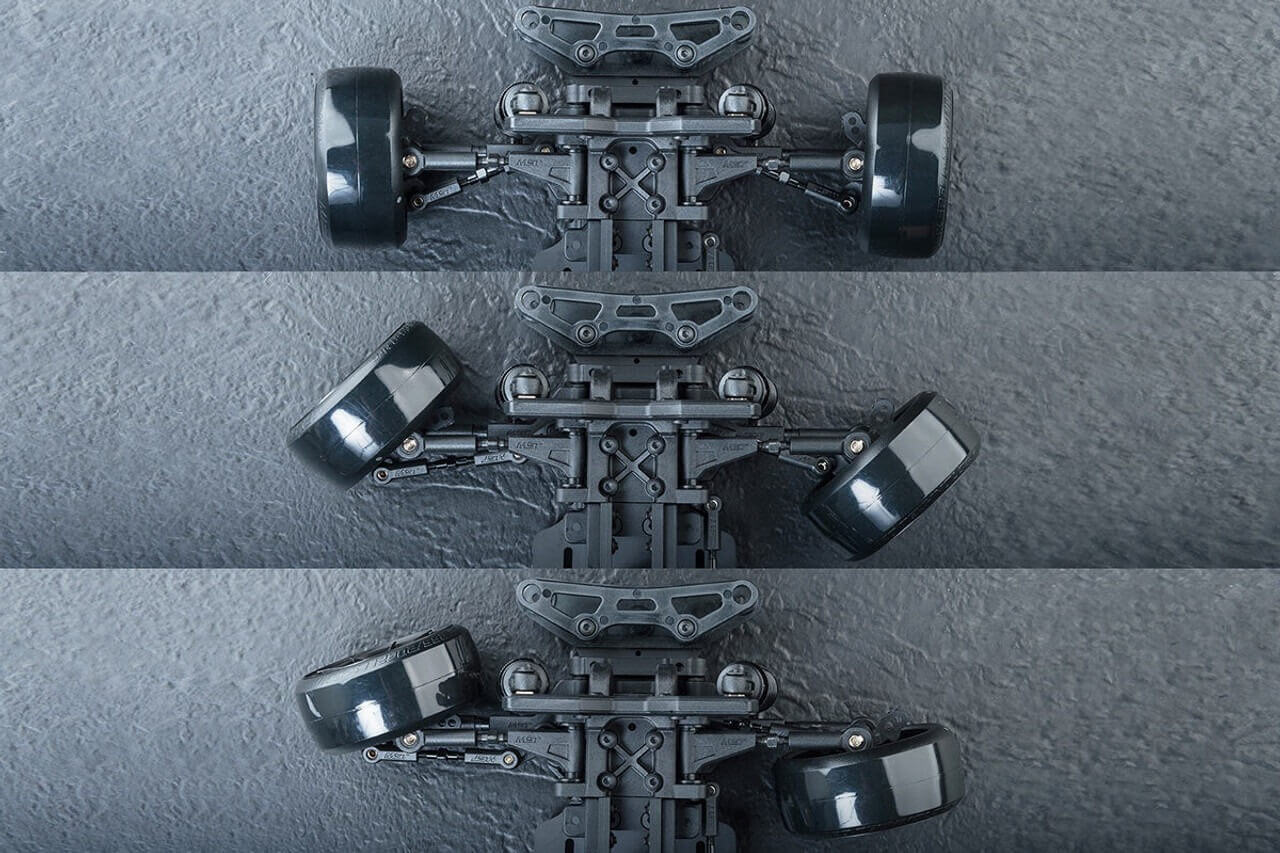
- Ackermann steering geometry is a crucial aspect of RC drift car setup that affects how the inside and outside front wheels turn during cornering.
- Adjusting Ackermann settings can fine-tune your car’s steering response and cornering characteristics.
- Increasing Ackermann angle (making the inside wheel turn more than the outside wheel) enhances initial turn-in response and can help with tight cornering.
- Decreasing Ackermann angle (making the inside and outside wheels turn more equally) can improve high-speed stability but may reduce responsiveness in tight corners.
- Experiment with Ackermann settings to find the balance that suits your driving style and track conditions.
Section 5: Suspension Setup – Achieving the Perfect Balance
- Spring Rate and Damping: The right mix of spring stiffness and damping is crucial. Soft front springs combined with firmer rear springs help in effectively initiating drifts.
- Ride Height and Weight Distribution: Adjusting the ride height and optimizing weight distribution are key to desired drift characteristics. A lower front ride height aids in quicker turn-ins, while balanced weight distribution ensures consistent performance.
Section 6: Practice and Fine Tuning an RC Drift Car
Tuning is an ongoing process that requires practice and careful observation. Spend ample time on the track to understand how each adjustment impacts your car’s performance. Maintain a meticulous log of changes and their outcomes, empowering you to make informed decisions during the fine-tuning process.
Bonus Tip:
Only ever make one change at a time. Then Test. if you make more than one change at a time, you will not know what change you made caused the car to change and how. This is incredibly important.
Section 7: Maintenance and Upkeep
Regular maintenance is crucial for a well-performing RC drift car. Follow this checklist:
- Clean and lubricate the drivetrain – including bearings!
- Inspect the chassis for damage.
- Replace worn-out parts promptly.
Proper maintenance enhances performance and extends the life of your vehicle.
In Summary:
This guide is the culmination of years of experimentation, competition, and collaboration within the RC drifting community. By leveraging insights from industry experts and incorporating feedback from countless hours on the track, this guide aims to provide the most comprehensive and up-to-date tuning advice available.
Whether you’re just starting out or looking to refine your skills, this guide is designed to address a wide range of topics, ensuring that drivers of all levels can find valuable insights to improve their performance.
Becoming a tuning master for your RC drift car is an exciting journey that allows you to customize your vehicle for peak performance and style. Starting with the fundamentals and gradually refining your setup through practice and patience will transform you into a drifting virtuoso.
Don’t overlook the critical aspects of wheel alignment, camber angle, toe angle, castor angle, roll center, wheel width, gyro tuning, transmitter tuning, ESC tuning, and Ackermann steering geometry, as they significantly influence your car’s overall performance, control, and response.
With dedication and meticulous attention to detail, you’ll soon find yourself effortlessly gliding through corners, leaving a lasting impression on both yourself and the Australian RC drift community.
If you’re on the Gold Coast, Brisbane or the Logan Area, come down and join us at the Track!
Leave a Reply
You must be logged in to post a comment.