
RC Drift Car Troubleshooting: Common Issues and How to Fix Them
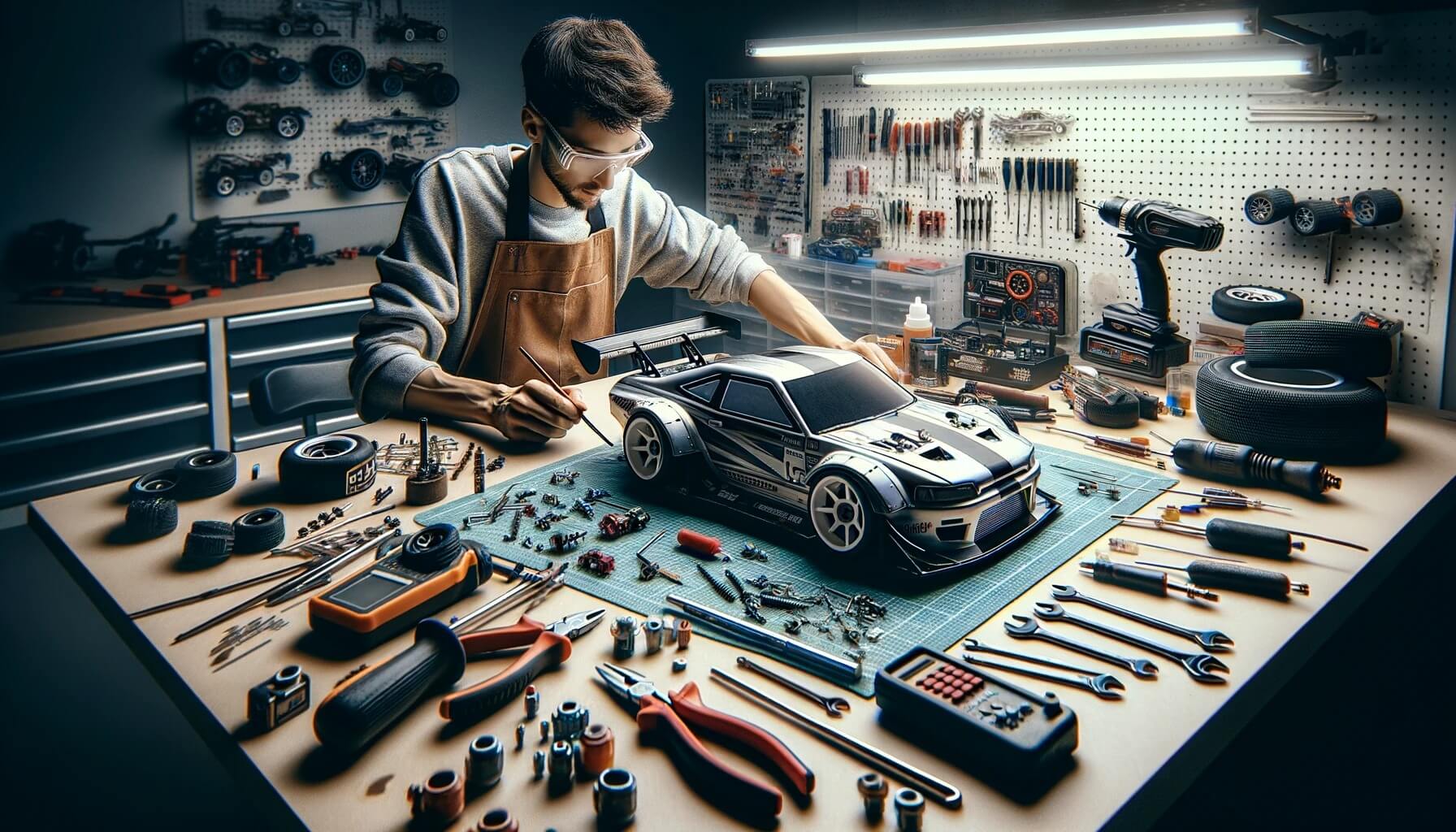
At some stage, every RC Drifter will have to do some RC Drift Car Troubleshooting. In the exhilarating world of RC drifting, maintaining peak vehicle performance is crucial. RC drift car troubleshooting is an essential skill set for enthusiasts, ensuring their rear-wheel drive (RWD) cars, especially those equipped with gyroscopes, continue to offer a dynamic and immersive driving experience. This comprehensive guide covers detailed solutions for the most common problems, ensuring your RC drift car remains in top condition.
Understanding Your RC Drift Car and Gyro
Effective troubleshooting begins with a solid understanding of your RC drift car’s mechanics and the gyro’s role. The gyro helps stabilize the car’s rear during drifts, enhancing control. However, issues can still arise, necessitating informed RC drift car troubleshooting strategies.
Issue 1: Erratic Steering Response
Symptom: Steering is unpredictable, with responses ranging from too sharp to too slow.
RC Drift Car Troubleshooting Fixes:
- Adjust the Steering Trim: Fine-tuning the steering trim on your transmitter can significantly impact handling.
- Inspect the Steering Servo: Check for damage or loose connections, as servos may require replacement due to wear and tear.
- Calibrate the Gyro: Proper gyro calibration is essential for correct steering behavior.
- Gyro Mounting: Check that the correct double sided tape is used to mount your Gyro. Old, hard tape can cause vibrations from the chassis to result in the gyro misbehaving.
- Tyre to body clearance: Check that the tires are touching the body whilst being driven on the track
Issue 2: Inconsistent Drifting
Symptom: The car struggles to maintain a drift, spinning out or not sliding enough.
RC Drift Car Troubleshooting Fixes:
- Evaluate Tire Choice: Ensure your tires are suited to your drifting surface, as they greatly influence performance.
- Adjust Weight Distribution: Modifying weight distribution can enhance drift stability.
- Tune Gyro Sensitivity: Finding the right gyro sensitivity balance is crucial for effective drift control.
- Ball Joints Binding: Check that none of the ball joints are binding
- Ball Connecting Nuts Loose: Check the Ball connector nuts in your joints have not come loose.
- Tyre to body clearance: Check that the tires are touching the body whilst being driven on the track
Issue 3: Loss of Power or Jerky Acceleration
Symptom: Acceleration is uneven, or the car experiences power loss.
RC Drift Car Troubleshooting Fixes:
- Check the Battery: Verify the battery’s charge and health.
- Check battery / powers Leads: Check and verify that the connectors of all wires including solder joints are solid with no dry joints.
- Examine the Motor and ESC: Clean and inspect for any signs of damage that could affect power.
- Clear the Drivetrain: Remove debris that could be causing acceleration issues.
Issue 4: Car Does Not Respond to Controller
Symptom: There’s no reaction to transmitter commands.
RC Drift Car Troubleshooting Fixes:
- Ensure Proper Frequency and Binding: Verify that your transmitter and receiver are correctly bound.
- Verify Battery Charge: Both the transmitter and car batteries should be fully charged.
- Inspect Receiver and Transmitter: Check for any damage or loose connections.
Issue 5: Car Spinning Out
Symptom: The car loses control and spins out during drift attempts.
RC Drift Car Troubleshooting Fixes:
- Adjust Gyro Sensitivity: Correct gyro sensitivity settings are key to preventing spins.
- Re balance Weight Distribution: Achieving a balanced weight distribution is essential for drift control.
- Tune the Differential: Proper differential settings can prevent the car from spinning out.
- Tyre to body clearance: Check that the tires are touching the body whilst being driven on the track
Issue 6: Problems with Bearings
Symptom: The car shows reduced performance, strange noises, or resistance in movement.
Bearings are critical for smooth operation. Dirty or poorly lubricated bearings can cause friction, affecting speed, handling, and efficiency.
RC Drift Car Troubleshooting Fixes:
- Clean Bearings Regularly: Use a bearing cleaner or isopropyl alcohol to remove debris.
- Lubricate Appropriately: After cleaning, lubricate bearings with quality oil or light grease.
- Inspect and Replace: Check bearings for wear and replace as necessary.
The Importance of Clean and Lubricated Bearings:
- Enhanced Performance: Smooth bearings contribute to better speed and handling.
- Reduced Wear: Proper lubrication decreases friction and wear on components.
- Increased Longevity: Regular bearing maintenance extends the life of your RC drift car.
RC Drift Car Troubleshooting Conclusion
RC drift car troubleshooting is vital for enthusiasts to enjoy uninterrupted drifting fun. Addressing issues like erratic steering, inconsistent drifting, power problems, unresponsiveness, spinning out and preventing bearing troubles with the outlined solutions will keep your RC drift car running smoothly. It is common that as the body moves around while driving, front wheels can bind on the body, always check this first. Incorporating regular maintenance and adjustments into your routine ensures your vehicle is always ready for action, providing thrilling drift experiences every time.
If you’re on the Gold Coast, Brisbane or the Logan Area, come down and join us at the Track!
Leave a Reply
You must be logged in to post a comment.