
A Deep Dive into Its Origins and Evolution
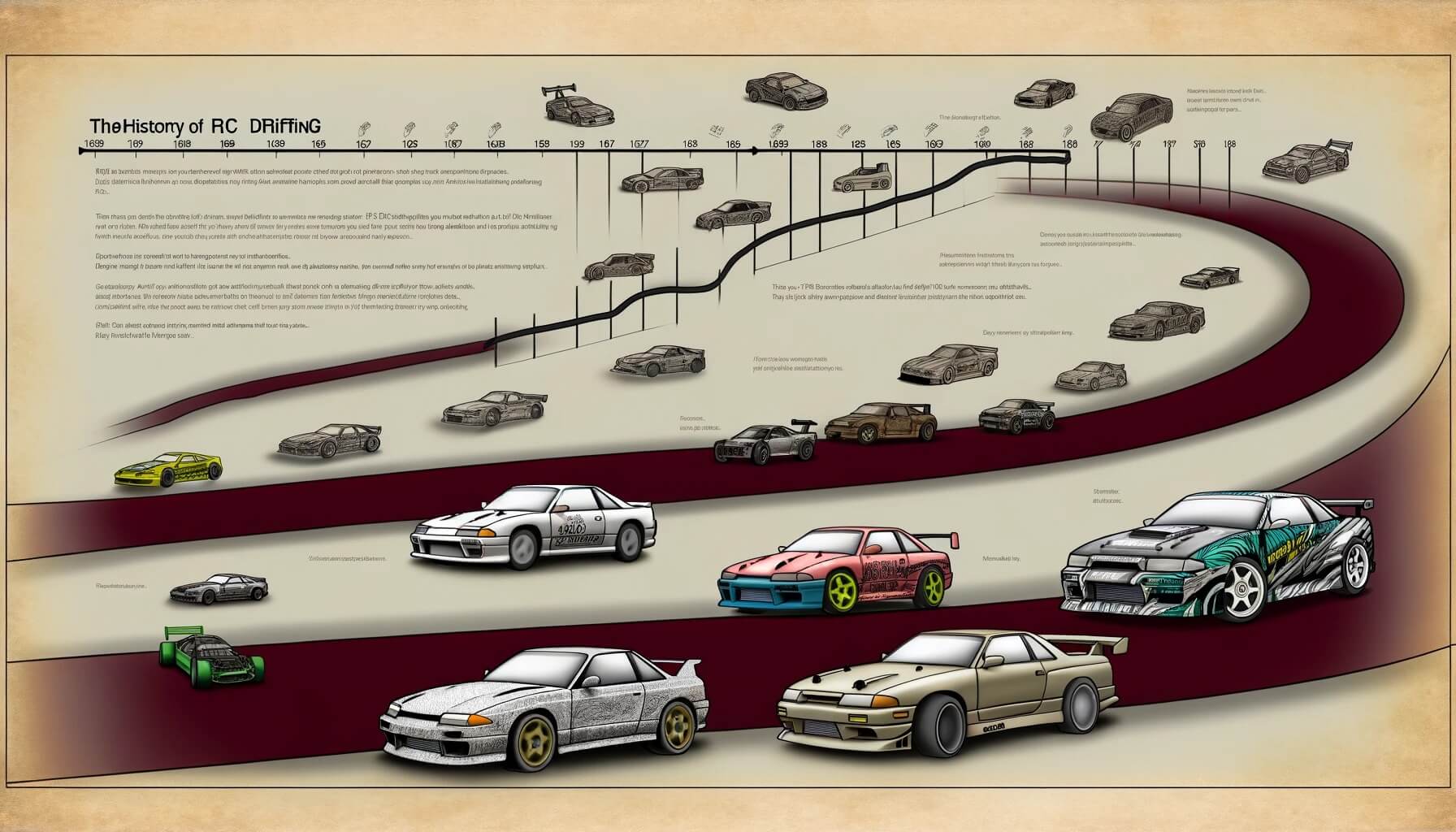
Let’s discuss the History of RC Drifting. RC drifting is a fascinating blend of technical skill and automotive passion, has evolved from simple modifications to a sophisticated hobby enjoyed worldwide. This detailed exploration traces the journey of RC drifting, emphasizing how it has become a dynamic and beloved aspect of the RC community.
The Early Days of RC Drifting History
The genesis of RC drifting in the late 1990s in Japan was a natural extension of the country’s rich drifting culture. Enthusiasts, inspired by the thrilling motorsport of drifting, began experimenting with their on-road RC cars, Their goal was to replicate the drifts seen on race tracks. These early attempts involved basic modifications like adjusting the suspension and tweaking the weight distribution. All to achieve the desired sliding effect. The ingenuity of these pioneers laid the groundwork for the hobby. They were able to demonstrate that with creativity, even regular RC cars could be transformed into drift machines.
Tire Innovation and the Birth of Drift-Specific Models
A significant milestone in the evolution of RC drifting was the innovation in tire design. Hobbyists discovered that by wrapping standard RC tires with PVC pipe sections, they could significantly reduce traction. This enabled the cars to drift more easily. This makeshift solution sparked the development of commercial hard plastic tires designed explicitly for drifting. Recognising the growing interest, RC car manufacturers began producing drift-specific models. These cars were equipped with features like rear-wheel drive and adjustable suspension settings, closely mirroring the real drift cars’ characteristics.
Technological Advancements and Global Expansion
The explosion in RC drifting’s popularity was fueled by advances in technology and the global reach of the internet. Brushless motors and sophisticated electronic speed controllers revolutionized how drift cars performed. They offered unprecedented precision and control. This period also saw the emergence of online forums and social media platforms. This was where enthusiasts from around the globe could share their experiences, tips, and designs. This global community played a crucial role in spreading RC drifting beyond Japan, establishing it as a worldwide phenomenon.
Competitive Drifting and Community Growth
As the hobby grew, so did the competitive scene. RC drift competitions, modeled after real-life drifting tournaments, became arenas for innovation and skill display. These events not only showcased the technical prowess of the drivers but also fostered a sense of community among participants. Outside the competitive circuit, local clubs, RC Drift Tracks and online forums thrived. They were able to offer spaces for hobbyists to exchange knowledge, discuss new modifications, and organize meet-ups and casual drift days.
The Influence of Media and Popular Culture
RC drifting’s surge in popularity can also be attributed to its portrayal in media and popular culture. Video games featuring car drifting, movies, and countless online videos have introduced the sport to audiences who might not have encountered it otherwise. This exposure has not only attracted new enthusiasts but has also helped demystify the hobby. As a result, making it more accessible to a broader audience. The impact of social media cannot be understated, as platforms like YouTube, Instagram, and Facebook have become invaluable resources for learning and community building.
Current Trends and Future Directions
The History of RC Drifting shows rapid growth and change. Today’s RC drifting scene is marked by continuous innovation. Recent trends include the integration of gyro technology to enhance stability and control, and the use of LEDs and scale accessories to increase realism. The community remains at the forefront of exploring new technologies, such as 3D printing, to create custom parts and accessories. Looking forward, there is a strong emphasis on sustainability, with manufacturers and hobbyists alike seeking eco-friendly materials and practices. The hobby is also becoming more inclusive, with efforts to welcome newcomers and ensure that RC drifting is accessible to all interested.
Conclusion: The History of RC Drifting
The history of RC drifting is a narrative of innovation, community, and passion. From its modest beginnings to its status as a global hobby, RC drifting has continually evolved, shaped by the creativity and dedication of its enthusiasts. As we reflect on its journey, it’s clear that the future of RC drifting is bright, with endless possibilities for growth and development. RC Drift Qld wants to help influence that!
Leave a Reply
You must be logged in to post a comment.