
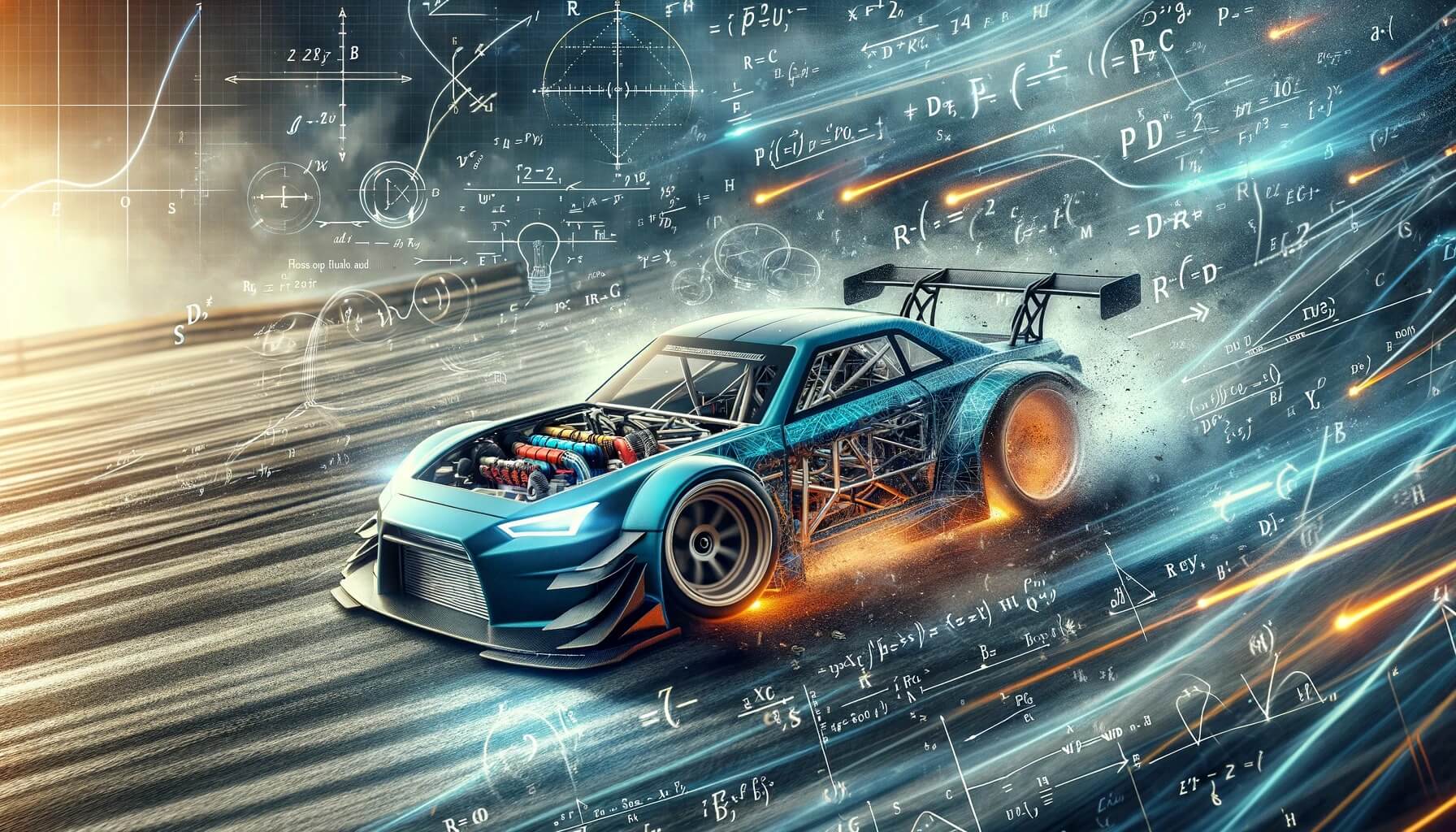
Understanding Car Dynamics
Embarking on the journey of RC drifting is not just about controlling a miniature car; it’s a deep dive into the physics that govern vehicle dynamics. This exploration is particularly fascinating with rear-wheel drive (RWD) models, where understanding the forces at play can significantly enhance your control and performance. Let’s navigate through the physics of RC drifting, providing insights to master the art with precision.
Weight Distribution: The Cornerstone of Drift Dynamics
Understanding how weight is distributed across your RC drift car is crucial for optimizing performance. A slight rear-weight bias often facilitates easier drift initiation, yet achieving a perfect balance is nuanced and critical for stability and control. Adjusting this distribution can significantly impact your car’s drift behavior, offering a foundation for enhanced maneuverability.
Traction: The Delicate Dance between Grip and Slip
The essence of drifting lies in managing the delicate balance between tire grip and slip. This balance, influenced by tire composition and surface conditions, requires precise throttle control to navigate. Mastering this balance allows for the seamless execution of drifts, embodying the core challenge of RC drifting.
Tire Selection: Tailoring Your Touch-point
Choosing the right tires is pivotal, as they directly affect your car’s handling and response during a drift. Drift-specific tires, designed to reduce grip and facilitate sliding, come in various compounds to suit different conditions. Selecting the appropriate tire can dramatically alter the car’s performance, making tire choice a critical decision in drift setup.
Aerodynamics: Sculpting the Air for Stability
While aerodynamics may play a secondary role in RC drifting, strategic use of aerodynamic components can impact downforce and stability. Aerodynamic adjustments, though subtle, can provide a more predictable and controlled drifting experience, especially at higher speeds.
Steering Precision: Your Direct Line to Control
The steering system is paramount in dictifying the drift angle and overall control of the RC car. High-performance steering components enhance responsiveness, allowing for more precise control over the vehicle’s behavior during a drift. Mastery of counter-steering is essential for maintaining control and preventing spinouts. Steering is one of the key dimensions to the Physics of RC Drifting
Power Delivery: The Quest for Balance
The motor and ESC are at the heart of your RC drift car’s performance, determining speed and the smoothness of power delivery. Selecting a motor and ESC that offer a balance between power and control is key to achieving a drift-friendly setup that complements the driver’s skill level and the car’s design. In fact, this is what the Physics of RC Drifting is all about…
Gyro Assistance: Refining Your Drift
Gyro’s add a layer of electronic assistance, stabilizing the vehicle and enhancing drift control. This technology allows for more precise maneuvers, supporting drivers in executing drifts with greater accuracy and consistency. Getting the best Gyro and making sure it is installed and set up right makes a huge difference to your RC Drifting
Conclusion: Mastering the Symphony of Forces
The physics of RC drifting is a complex interplay of forces, each requiring careful consideration and understanding. From weight distribution and traction to tire selection, aerodynamics, steering mechanics, power delivery, and gyroscopic stabilization, every aspect contributes to the vehicle’s drifting capabilities. By embracing these principles, enthusiasts can not only improve their drifting technique but also deepen their appreciation for the intricate dance between car and driver, navigating each turn with informed grace and skill.
If you’re on the Gold Coast, Brisbane or the Logan Area, come down and join us at the Track!
Leave a Reply
You must be logged in to post a comment.